Automatic Iron vs Steam Iron: Which Is Better for Clothes?
A steam iron and an automatic ironing machine both get wrinkles out of clothes, but they ask very different things of you. A steam iron needs your hands and a board for every inch of fabric. An automatic iron needs a minute to set up, then works on its own. Here is how the two compare, and how to tell which iron for clothes suits your week.
The short answer: if you wear shirts most days and the part you dislike is standing at the board, an automatic iron is the easier routine. If you want sharp trouser creases, crisp pleats, or you iron a bit of everything, a steam iron is the more flexible tool. Plenty of homes keep both.
How a steam iron works
A steam iron is a heated metal soleplate with a small water tank. Heat relaxes the fibers, steam carries that heat deeper into the fabric, and the weight of the plate flattens the wrinkles as you glide it over a garment laid on an ironing board. The result depends on you: the temperature you pick, how you move the iron, and how carefully you work around collars, buttons and seams.
How an automatic iron for clothes works
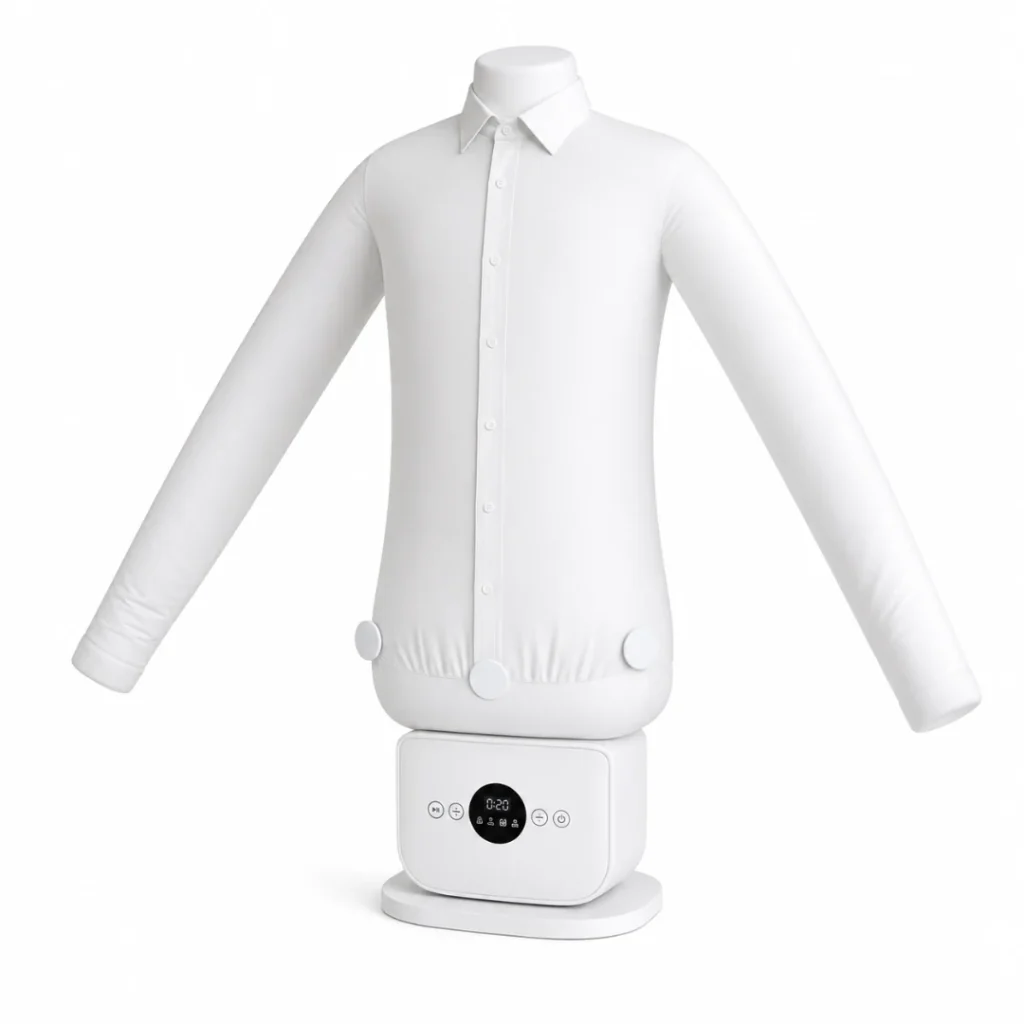
An automatic iron, also sold as a hands-free iron or an ironing machine, swaps the hot plate for warm air. You pull a damp garment over a shirt-shaped form and clip the collar and hem in place. When you press start, warm air fills the form from the inside. The fabric is held taut while the airflow dries it, and fabric that dries under tension dries smooth.
Nothing hot presses on the outside of the garment, so there is no plate to scorch it, and you do not have to stay with it while it runs. The IronForClothes automatic iron for clothes works this way, with an adjustable form that fits shirts from size S to XXL.
Steam iron vs automatic iron at a glance
| Steam iron | Automatic iron | |
|---|---|---|
| Setup | Fill the tank, set up the board and wait for it to heat | Pull the damp shirt over the form and fasten the clips |
| Your time per shirt | All of it, often 5 to 10 minutes for a dress shirt | A minute or two to put it on and take it off |
| How it smooths | Heat, steam and pressure, one small area at a time | Warm air stretches and dries the whole garment at once |
| Starting point | Dry or damp fabric | Damp fabric only |
| Sharp creases and pleats | Yes | No, it smooths rather than presses |
| Scorch marks | Possible if the plate is too hot or stays in one place | No hot plate touches the fabric |
| Best for | Creased trousers, pleats, quick touch-ups, mixed fabrics | Everyday shirts, blouses and tops, done every week |
Where a steam iron still wins
- Creases on purpose. The front crease on suit trousers or a pressed pleat needs pressure along a line. An air form smooths fabric; it does not press creases into it.
- Quick touch-ups. For one wrinkled collar on your way out the door, a hot iron is faster than any full cycle.
- Odd shapes. Tablecloths, pillowcases, gathered dresses and anything that does not fit on a form are easier on a board.
- Price. A basic steam iron costs a fraction of an ironing machine.
Where an automatic iron wins
- Your time back. Once the shirt is on the form, you can make breakfast, answer email or get the kids ready. Your hands-on time drops to a minute or two per shirt.
- The whole shirt at once. Sleeves, back and front dry together, so no part of the shirt is left creased because you ran out of time.
- No scorch marks or shiny patches. Without a hot plate, there is nothing to mark the fabric when you are in a hurry.
- Kinder to buttons. No plate presses down on them, and ironing over buttons is a common way to crack them.
- Drying and smoothing in one step. A shirt can go straight from the washer onto the form, still damp, and come off dry.
What about a handheld steamer?
A steamer sits between the two. It relaxes wrinkles with steam while the garment hangs, which is quick and gentle on delicate fabrics, dresses and curtains. It does not press or dry: you hold it the whole time, cotton shirts end up looking relaxed rather than crisp, and the fabric stays slightly damp for a while. If you mostly wear cotton and linen shirts, a steamer rarely gives the finish people expect from ironing.
What to know before you buy an automatic iron
- The garment has to be damp. Use it straight from the washer, or mist a dry shirt with water first. A bone-dry shirt will not smooth.
- A cycle takes a while, but not your while. Expect roughly 10 to 20 minutes for a shirt, depending on the fabric and how damp it is, and longer for thick fabrics. You do not have to watch it.
- It smooths, it does not press. If you like a sharply pressed collar or button strip, a few seconds with a hand iron finishes the job.
- Check the fabric. Cotton, linen and cotton blends suit warm air well. Leather, suede and silk do not belong on the form.
- It runs a fan. Expect some noise while it works, and give it a spot near an outlet where the shirt can hang freely.
Which should you choose?
Choose a steam iron if you iron a little of everything, want sharp creases, or only iron now and then. Choose an automatic iron if shirts and blouses make up most of your ironing, you do them every week, and the standing at the board is what you want to stop. Many people keep a small iron for creases and touch-ups and let a machine take care of the weekly shirts.
If the second description sounds like you, see how the IronForClothes hands-free iron for clothes works. Sticking with the board? Our step-by-step guide on how to iron a dress shirt and our ironing temperature chart will get you a better result in less time.
More ironing guides
How to Get Wrinkles Out of Clothes Without an Iron
Eight practical ways to get wrinkles out of clothes without an iron, from a steamy bathroom to your dryer and a hair dryer, plus how to stop creases forming.
Ironing Temperature Chart: What Setting for Each Fabric
The right iron setting for cotton, linen, wool, silk, polyester and more, what the dots on a care label mean, and how to iron a blend without damage.
How to Iron a Dress Shirt in 7 Steps
Iron a dress shirt in the order that keeps it crisp: collar, cuffs, sleeves, yoke, back and front. Step by step, with tips for a sharper finish.