Ironing Temperature Chart: What Setting for Each Fabric
Most ironing accidents come down to one thing: the wrong temperature. Too cool and the wrinkles stay put. Too hot and synthetics melt, wool turns shiny and silk scorches. This chart gives you the right setting for each common fabric, and explains how to read the iron symbol on a care label.
Rule of thumb: cotton and linen take high heat; wool, silk and polyester take medium or lower; nylon, acrylic and acetate take low heat. When in doubt, follow the dots on the care label, start low, and turn the heat up only if the wrinkles will not budge.
What the dots on a care label mean
The iron symbol on a care label shows the highest safe temperature. Count the dots inside the iron:
| Symbol | What it means |
|---|---|
| Iron with 1 dot | Low heat, up to about 230°F (110°C). Typical for nylon, acrylic, acetate and spandex. |
| Iron with 2 dots | Medium heat, up to about 300°F (150°C). Typical for polyester, wool, silk and rayon. |
| Iron with 3 dots | High heat, up to about 390°F (200°C). Typical for cotton and linen. |
| Iron crossed out | Do not iron. Heat would damage the garment. |
An iron with crossed-out lines underneath means you can iron it, but without steam. Dial markings vary by brand, so check your iron’s manual to see which position matches one, two and three dots. Many irons print the dots right on the dial.
Labels and fabric charts do not always agree, especially for silk and wool. When they differ, the label on your garment wins, because it reflects the finish and blend of that exact piece.
Ironing temperature chart by fabric
| Fabric | Setting and how to iron it |
|---|---|
| Cotton | High (3 dots), with steam. Iron while slightly damp for the smoothest finish. Turn dark cotton inside out to avoid shine. |
| Linen | High (3 dots), with plenty of steam. Iron while still damp, inside out for dark colors. Hang it right away, as linen creases easily. |
| Denim | High (3 dots), with steam. Iron inside out while damp to protect the color. |
| Wool | Medium (2 dots), with steam. Use a press cloth. Lift and lower the iron instead of gliding it, so the surface does not turn shiny. |
| Silk | Low to medium (1 to 2 dots), no steam. Iron inside out while dry, with a press cloth. Water drops can leave marks. |
| Polyester | Low to medium (1 to 2 dots), light steam. Iron inside out. Too much heat leaves shiny patches or melts the fibers. |
| Rayon and viscose | Medium (2 dots), light steam. Iron inside out while slightly damp. Rayon is weaker when wet, so do not stretch it. |
| Nylon | Low (1 dot), no steam. Use the lowest setting and a press cloth, since nylon melts easily. |
| Acrylic | Low (1 dot), no steam. Iron inside out. Many acrylic knits need no ironing at all. |
| Spandex and stretch blends | Low (1 dot), no steam. Iron quickly, or skip it. Heat can damage the stretch. |
How to iron a blend
Set the iron for the most delicate fiber in the blend. A cotton and polyester shirt gets the polyester setting, not the cotton one, even if it is mostly cotton. Go slowly, add a little steam if the wrinkles are stubborn, and turn the heat up one step at a time only if the fabric copes.
Tips that prevent damage
- Sort by temperature. Start with low-heat fabrics and work up. An iron heats up much faster than it cools down.
- Test first. Touch the iron to an inside seam or hem for a second before you start on a garment you are unsure about.
- Use a press cloth. A clean cotton cloth, such as a pillowcase or a cotton handkerchief, between the iron and the garment prevents shine on wool, dark colors and synthetics.
- Iron dark colors inside out. It stops the shiny patches a hot plate can leave.
- Mind prints and trims. Iron screen prints, embroidery and sequins from the inside, or iron around them.
- Keep the soleplate clean. Residue on the plate can leave marks on light fabrics, especially at high heat.
Fabrics you should not iron
Leave the iron off leather, suede, vinyl and faux leather, rubber-coated or waterproof fabrics, and anything with a crossed-out iron on the label. Velvet and other pile fabrics flatten under a hot plate; steam them from a distance instead.
A way to skip the settings
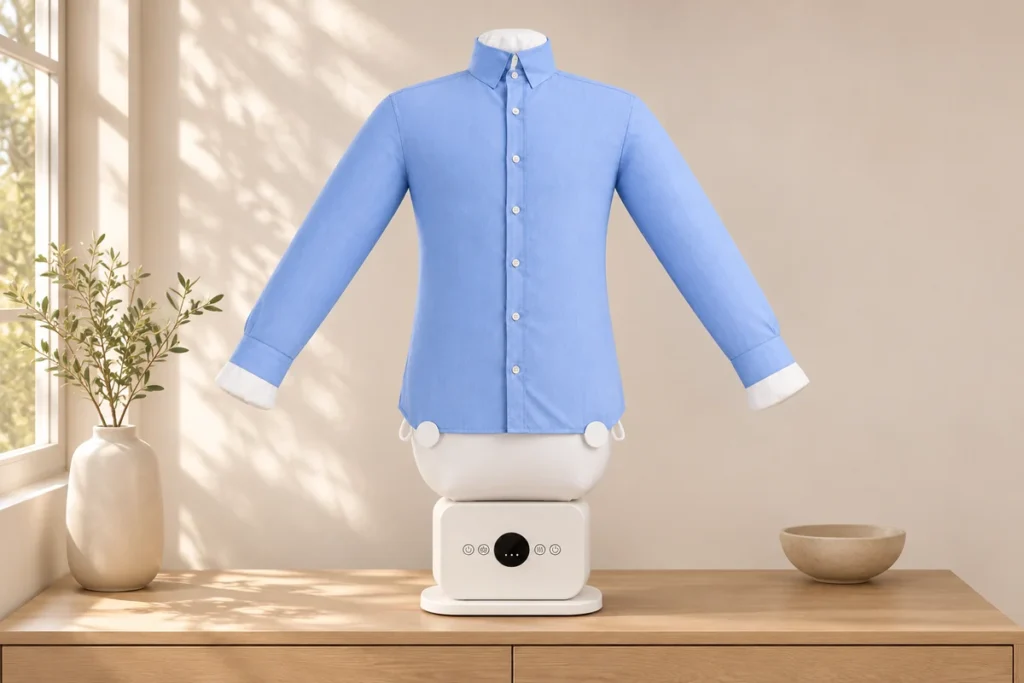
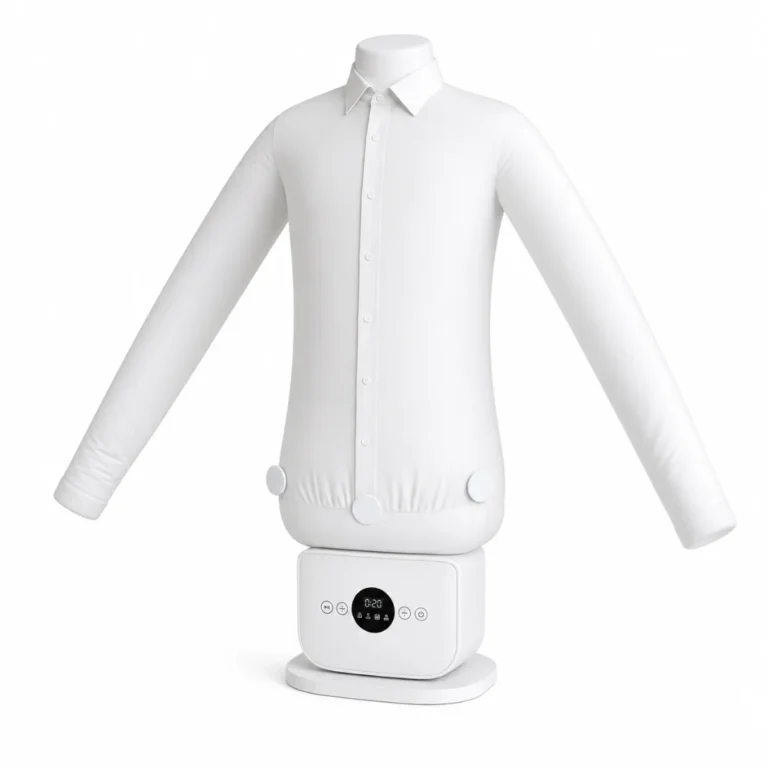
An automatic iron for clothes does not use a hot plate at all. It holds a damp garment taut on an inflatable form and dries it smooth with warm air, so there is no soleplate temperature to choose and nothing to scorch. It is made for cotton, linen and cotton blends; leather, suede and silk do not belong on it. For shirts you iron by hand, follow our guide on how to iron a dress shirt.
More ironing guides
Automatic Iron vs Steam Iron: Which Is Better for Clothes?
How an automatic iron for clothes compares with a steam iron: how each one works, how much of your time it takes, what it does best and which suits you.
How to Get Wrinkles Out of Clothes Without an Iron
Eight practical ways to get wrinkles out of clothes without an iron, from a steamy bathroom to your dryer and a hair dryer, plus how to stop creases forming.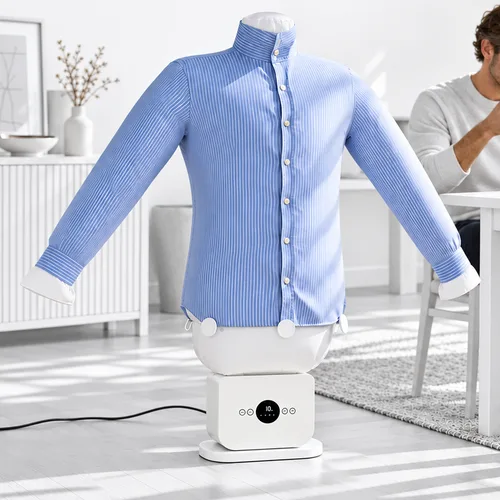
How to Iron a Dress Shirt in 7 Steps
Iron a dress shirt in the order that keeps it crisp: collar, cuffs, sleeves, yoke, back and front. Step by step, with tips for a sharper finish.